Using Dermalize to heal tattoos
Self Adhesive films are a revolutionary healing product being used in tattooing. There are lots brands of film, but we currently use one called Dermalize. Heres a link to their site, it contains some great information.
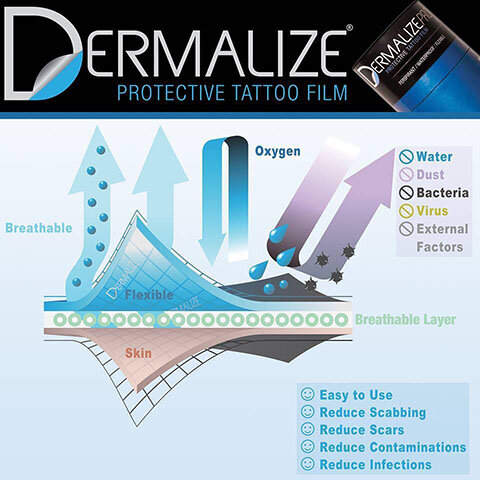
Dermalize is a great solution for tattoo healing - its a protective covering for your new tattoo that stops it from being open to the air and irritants, and stops it from drying out too fast, which in turn limits scabbing and dryness. we use dermalize on a lot but not all tattoos. sometimes something is too big to cover, and some tattoos are easier to heal such as some linework tattoos.
Applying the Dermalize
Where you finish getting tattooed either we will cover your tattoo with clingfilm, or a first piece of dermalize. over the following 24 hours your new tattoo will weep some lymph fluid/white blood cells/general gunk and excess ink thats been trapped in pores and micro creases of your skin. this is totally normal and expected. We will ask that you have slept the first night with your tattoo wrapped in cling film. In the morning you will need to remove the cling film or first piece of dermalize if you had one, wash the tattoo gently in warm soapy water or the shower, rub very gently with your fingertips or a gentle palm to remove and thicker slime, then pat it dry. Once dry, you will need to apply the dermalize.
Remove the thin back strip and part of the larger backing
Using the arrows on the film to centre the sheet, line up the sheet to cover the whole tattoo with at least 2cm at the bottom -if you have a larger tattoo needing two sheets of film, place the first sheet to half cover the tattoo -ie. a 2cm margin around all of the left side, top and bottom, the second sheet will got to the right hand side
Gently smooth down the film until its all stuck, trying to avoid air bubbles. Don’t worry if there are some bubbles, they won’t be an issue. if they are close to the edge try gently squeeze them towards the edge and out, but don’t worry too much.
Peel the top sheet off by peeling the green arrows away from each other to leave only the thin film.
If you have a larger tattoo needing two sheets of film, repeat the process, overlapping the first sheet with the second by around 2cms
Voila! all done. leave it now for around 4-5 days.
Once you’re all wrapped up and stuck down you can still shower, get the film wet (but not prolonged submersion) wear tight clothes like tights or leggings and move around. you can pretty much try to forget its there. If at any point it starts to catch and peel back you can trim the wrinkled edge carefully with nail scissors, but if it peels back enough to uncover any part of the tattoo take it off and wash it, then follow normal aftercare instructions - keep it clean and apply a little aftercare cream to it when it feels dry or tight.
Eek! have I had a reaction to the dermalize?
Whatever you do, Never google ‘is my tattoo infected’ - chances are its probably not, and all you’ll see is either worst case scenarios or more scary stuff that will put you off your dinner. If you genuinely think that your tattoo is infected contact us as soon as possible to cast an eye over it, and/or go to your GP or walk in clinic. Back to dermalize. The sticky bit of dermalize is a hypoallergenic, non latex or natural rubber adhesive. Unfortunately this doesn’t mean that no one will get an allergic reaction to it. Lots of people use it successfully, but every now and again someone will have a reaction. reactions can range from simple redness or itching to a more obvious painful reaction. In hot weather more people are likely to get a heat rash under it and as you’re probably already a bit nervous about looking after your new tattoo you might think its an infection. Generally if you experience anything itchy or mildy sore in the first 24 hours of using the film take it off, give the area a good (gentle) wash, and then let the area dry out for 24 hours before putting any creams or lotions on it.
If you have reason to believe you have developed an infection please seek medical advice from a GP or walk in centre. We take every measure professionally possible to avoid any contamination within the studio but as soon as you leave we cannot control anything that may contaminate your new tattoo, or avoid allergic reactions to films or creams.
You can always get in touch with us for advice if you need it.
Removing Dermalize
Time for the big reveal! you probably have some slimy gunk under the film by now that is a mix of colours, this is totally normal. To remove the film, rub gently against the edge of the film until it wrinkles and gathers, and then pull the film along the skin instead of up and away, as you can see in the video. Some people find it easier to remove in the shower whilst getting it wet. It is not unusual to have slight redness of the skin around the tattoo or a wrinkled texture due to the film being on for the time period. This should disappear in a day or two. Give the tattoo a good wash with warm soapy water and for the next few days use a gentle moisturiser as the tattoo sheds some thin flakes.
I've got a medical condition... can I still get tattooed?
We get a lot of questions from people with existing illness, immune diseases, ailments, skin conditions and so on. Obviously we are not medical professionals and I will always advise you to speak to your GP, Consultant, Oncologist, or medical professional you fall under. Generally we would require you to get the go ahead from a medical professional before getting a tattoo because they will always know you and your medical history best, this is something we cannot reasonably be expected to be able to do. However I have some clickable links that are worth reading and can give general advice for you on some minor things.
Just so you know…
In our studio nearly every item we use (apart from things like machines and cables, and obviously the beds) are single use. If it is not single use it is wrapped, covered, and sterilised with hospital grade cleaners before and after a procedure. We all use single use, individually wrapped and gas sterilised needles and grips (the bit between the machine and needle). We do not have an autoclave (a sterilising unit) as we don’t sterilise anything to reuse. This means we can be absolutely sure that the equipment we use is single use and will NEVER under any circumstances come into contact with any one but you.
We use licensed Biological waste contractors to remove our waste safely and legally, and our certificates of transfer are available to view if requested. We have our current up to date environmental health inspection report available for viewing by clients in our bylaws book in reception so you can be assured that we take every measure to prevent infection and contamination of any kind.
Diabetes -
I would say this is one of the most common conditions we come across in our studio.
https://diabetesstrong.com/diabetes-tattoos-what-you-need-to-know/
this is a quite informative link for information on getting a tattoo with diabetes. Generally people with well maintained diabetes can get tattooed, but it is essential you stay on top of your healing times and contact your GP if you feel your healing is taking longer than normal. If you have suffered any vascular damage or neuropathy in your legs I highly recommend you do not get tattooed below the waist, I would be very concerned for your healing times and would need you to definitely have a chat with your GP before considering it to see what they think. In general it’s preferable in whatever condition you are in you get a thumbs up from a doctor first.
Certain medications including blood thinners -
A tattoo won’t make you pour with blood, but it does open the skin. Generally we say no to people taking blood thinners, but if you speak to your GP and they have a different answer then please come and chat to us about it.
Any condition needing immunosuppressants - Crohn’s disease, Lupus, Some skin conditions, etc -
Please consult a GP or consultant first, they will be able to advise you much better than us.
Skin conditions like Excema and Psoriasis -
Tattooing can exacerbate these conditions. The trauma of tattooing can sometimes cause a flare up even in a place you haven’t had the condition appear before. I have heard that these things are harder to get advice from a GP from due to it being a bit more ‘random’ - if you have a skin condition like this it is important to be aware it could trigger it and that you may have prolonged healing times or need touch ups in the future. Again, a medical professional is the one to trust though, as tattooists we are not qualified or trained to give proper medical advice.
On antibiotics? -
This is a harder one - Im not sure of the answer. To be honest I would say if you are already fighting an infection is your body well enough to try and heal something else? I can’t find any peer reviewed medical information about this. When you get diagnosed and given antibiotics for whatever infection you have ask the doctor if you’re OK to get a tattoo, they are the ones that can say yes or no for definite. I found this link that says not to get tattooed but ideally I prefer to share things that are supported by medical knowledge. If I come across anything better I’ll edit the post.
https://authoritytattoo.com/tattoo-on-antibiotics/
HIV/AIDS -
As with every medical condition it is important that you let us know when you fill out the consent form if you have anything, including HIV/AIDS. It is as important for you as it is for us to be able to give you the best treatment and advice regarding the procedures. As you might know already, tattooing breaks the skin and although we take every measure possible to not introduce infection in the studio by using single use equipment, we cannot control what happens when you leave so we need to be able to give you the best aftercare advice. If you have HIV/AIDS, you will likely be on ART medication and have regular checks with your doctors/consultants to check your viral load. If your CD4 count is lower than 100 you may be more at risk of developing infections or not being able to fend off infection due to low immunity. This is definitely something to discuss with your specialist and wait for a higher CD4 count to be on the safe side.
The treatments and medications for HIV/AIDS are absolutely incredible now and there is no reason why a person who is taking their medications properly and is fully in control of their condition cannot get tattooed safely, without the risk of prolonged or unsatisfactory healing. As i’ve said many times before in this post it is 100% best to ask your specialist their advice on getting tattooed (as tattooists our advice tends to be more verbatim and google based) so they can advise you on any possible problems with healing or in general important things you should know about wound healing.
We try to be compassionate and discreet in the studio and understand that having to declare a HIV/AIDS status can be a very traumatic experience, so please feel comfortable to arrange to come in for a private chat before your appointment if you would like to.
If you have any other questions regarding tattoos and existing conditions or medications please comment on this post and we’ll get back to you!
How do I get tattooed by you?
So! you’d like to get tattooed by me? Heres the how. Firstly I have a waiting list system which means we collect details of people who want to get tattooed and then call through at our booking points which usually happen twice a year.
Ongoing clients…
I get very busy and do a lot of ongoing work which means my diary fills up quickly. If you have ongoing work with me we encourage you to book more than one session at a time to make sure theres enough time scheduled for you in the year to get your work done. We prioritise ongoing work when we make the bookings so don’t worry about not getting your big pieces finished, just make sure that when you add your name to the waiting list you mention it is ongoing / addition to existing things we’ve already made together.

New clients…
The wait for new tattoo appointments is currently 8-12 months in advance. It sounds like a lot but believe me, a. it flies by, I promise! and b. it gives you plenty of time to save. If you are a new client and would like to get tattooed then please email tltnorwich@gmail.com or go to tltnorwich.co.uk and fill out the contact form. Make sure to include as much detail as possible ie. size, area, style and any photos you may have of reference material. Please note, it usually take a few days to answer emails as we are a busy studio, and if it is the time of year we are doing bookings it can take a couple of weeks to get a response as we tend to get snowed under during these periods. If you have any questions that need a quicker answer you can call 01603 613277 for a faster response.

Cover up's - the process
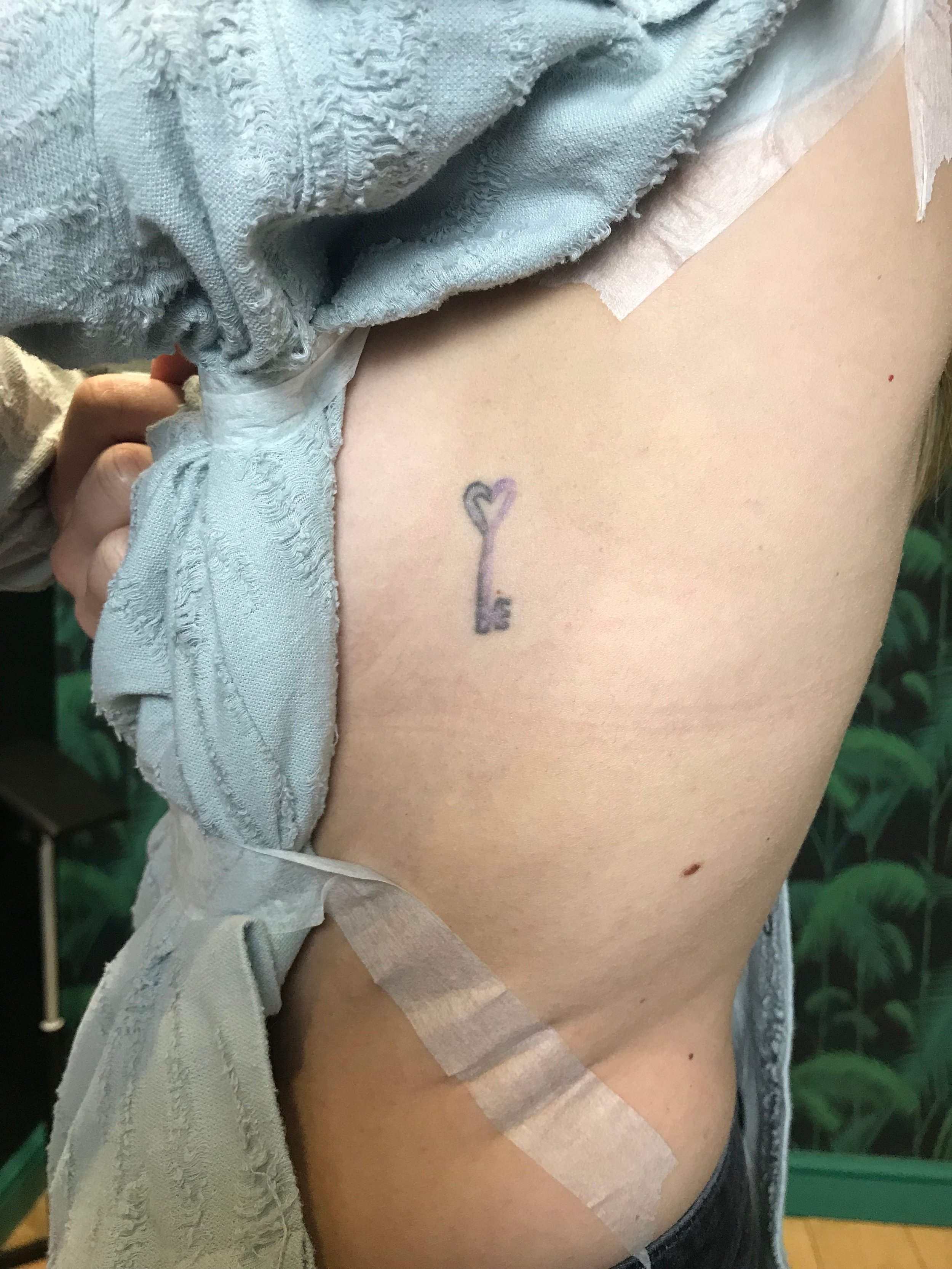
original tattoo
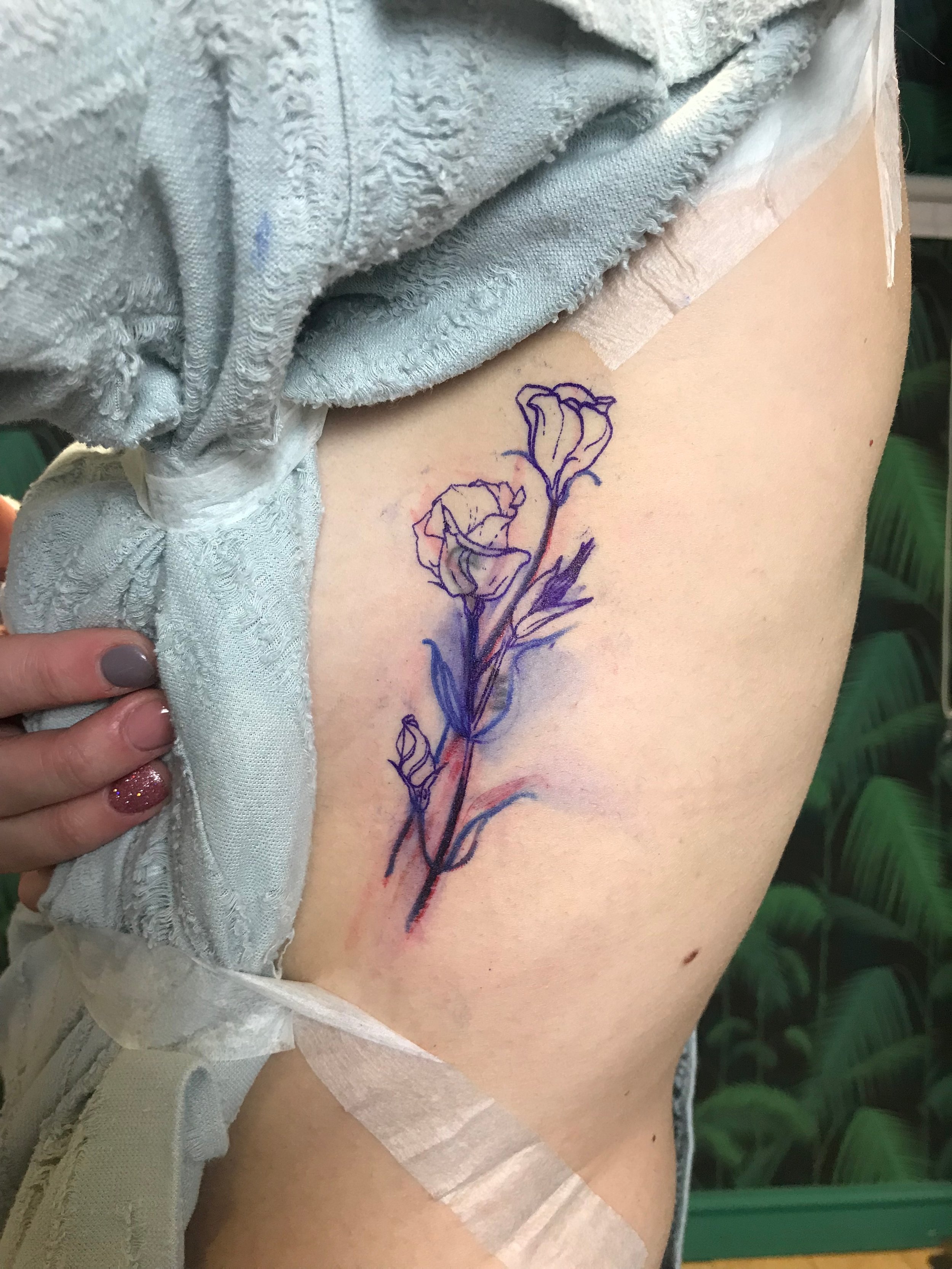
stencil
Lets say you need a cover up. You have a tattoo you dislike, you had it done 15 years ago, on holiday, it was an ex’s name (yuk), maybe it’s not that old, you just don’t like it now - we all get to change our minds! How do we make this happen?? Well… firstly I need to assess how realistic it is to cover your old tattoo is. I will need to look at how big it is, how black it is, how much space it takes up in the area it sits, and most importantly what you want it to be covered with. sometimes I can work with your ideas and make them happen easily, other times you may need to let me guide you more on what will work. most of the time the new tattoo is going to need to be bigger than the original one, but don’t worry, I always try to be a sympathetic to your body and choices as possible. A pink rose will never cover a black lettered name, but if we add in some leaves and make it big enough I can make it work. We also highly recommend a bit of laser treatment before cover ups, many clients have had this and it works very well and makes the options much greater when covering. A lot of cover up tattoos will need to have a touch up when they are healed to make sure that they are fully saturated, whenever I take on cover ups I will always try and use the lighter tones I can before I make them too dark - this way if they heal covered the first time then that is perfect, but depending on the original tattoo we may need to go back into it to gain a little more saturation and covering with some darker tones.

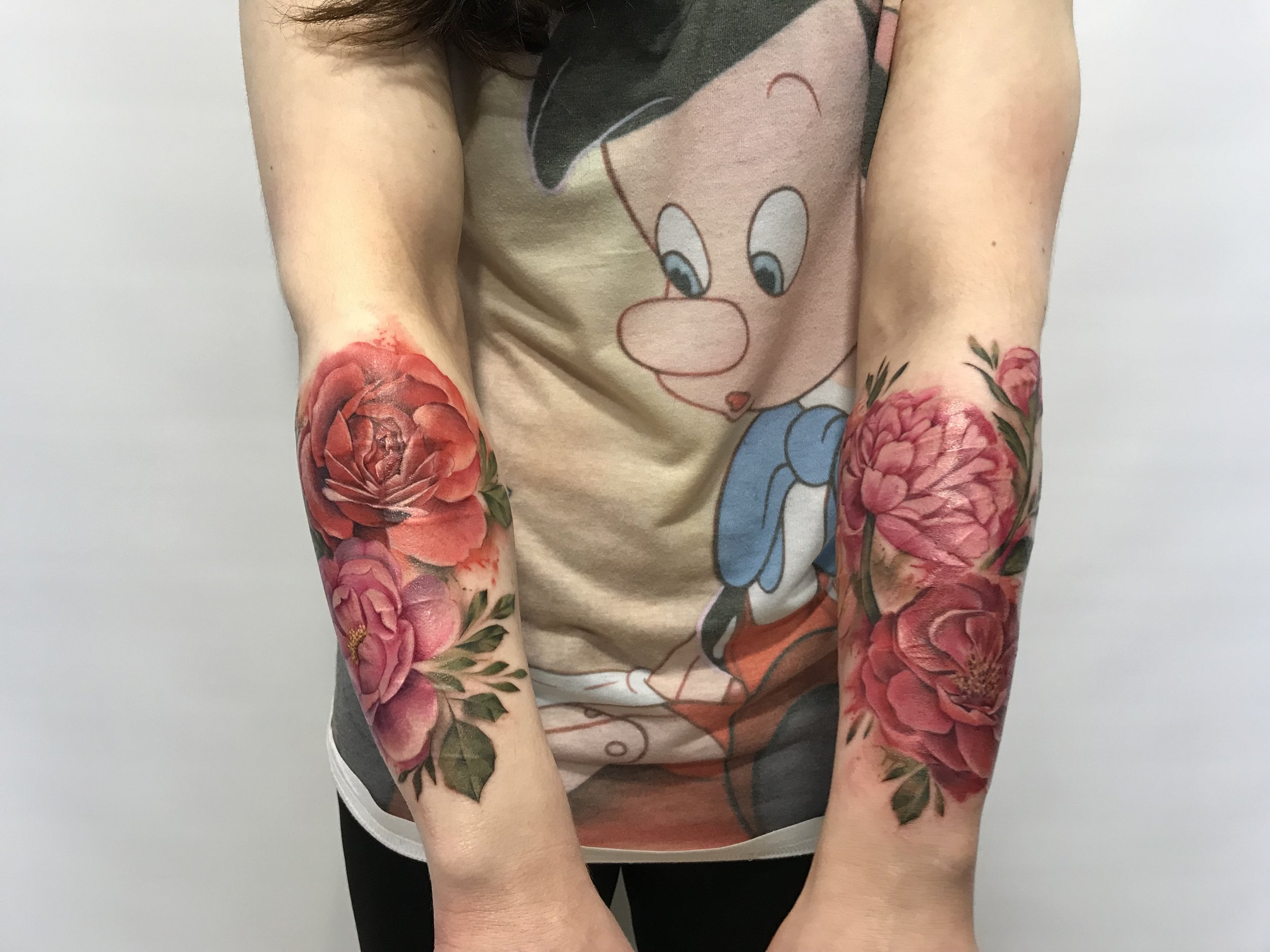
finished cover up
Tattoos and Scars.
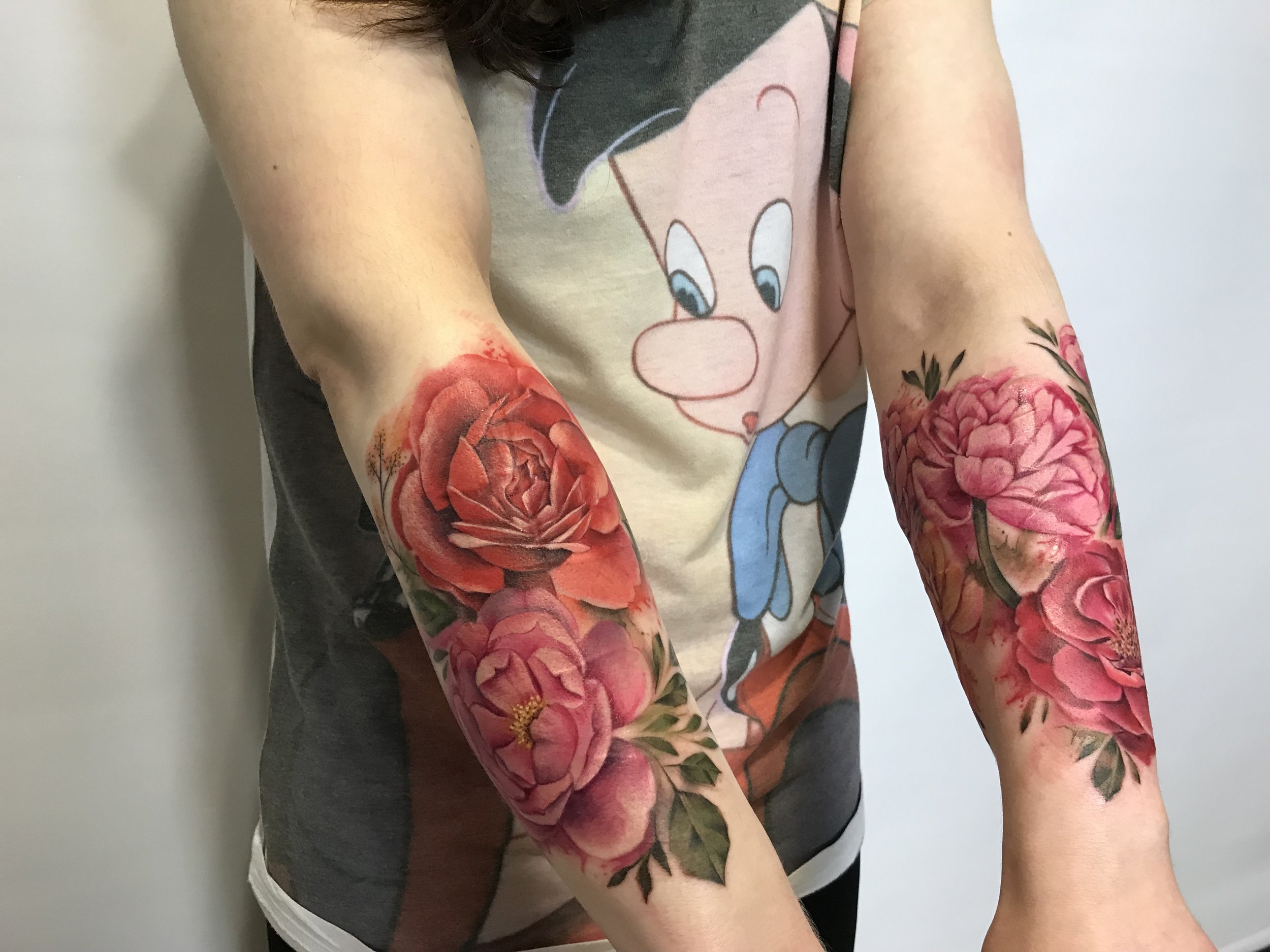
finished piece
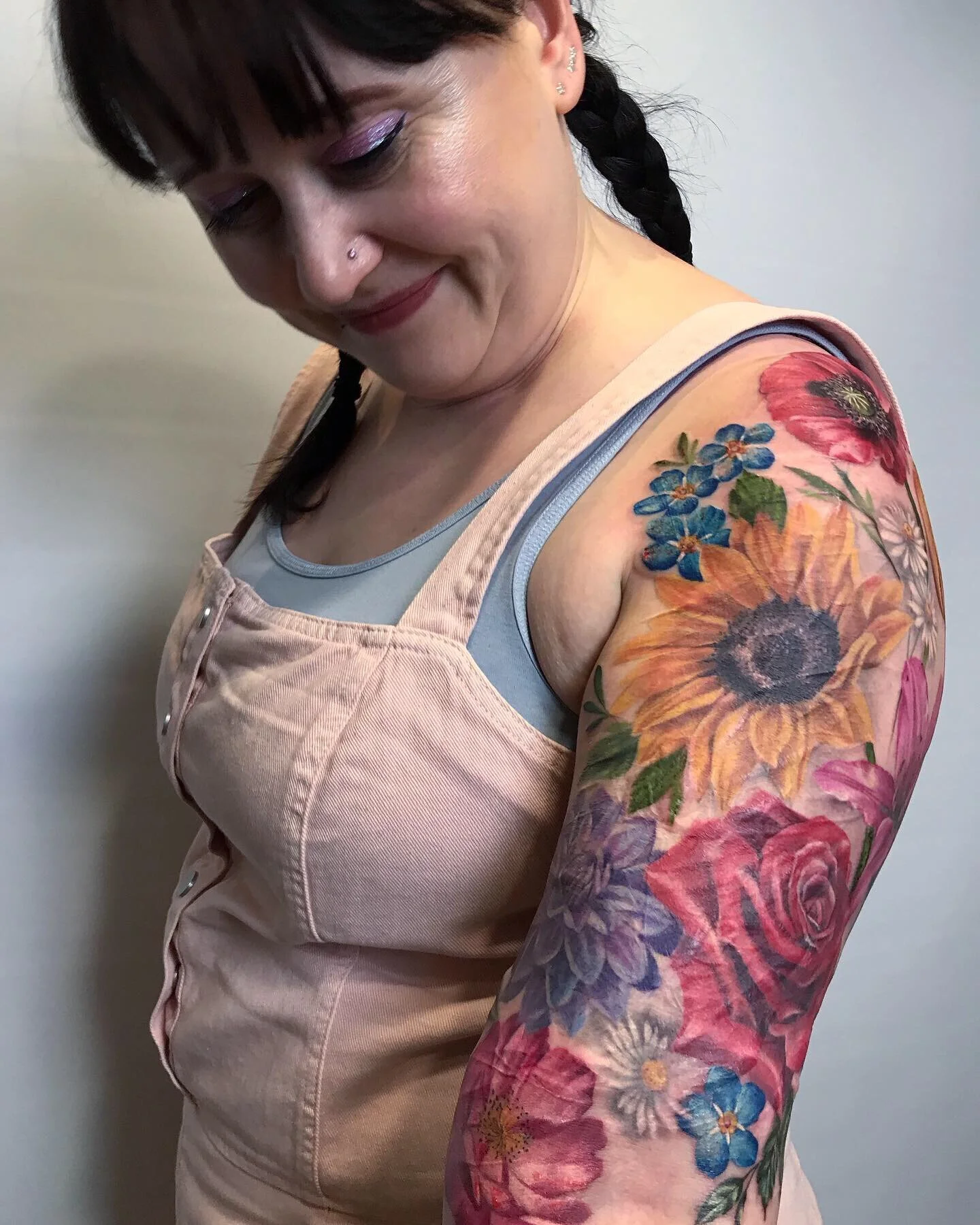
The tattoos at the start of this post are covering up some scarring on the clients arms. please note there are photos of self harm scars at the end of this post. If you have scars that you would like to cover or disguise with a tattoo, this should hopefully give you an insight into where to start and how realistic the idea is.
First of all, your scars will need to be at least 12+ months old, even more preferably 2 years + old. Massaging with oil or cream can help the scar tissue and keep it supple, and keeping it out of the sun can also help hugely. In the weeks before your appointment, regular moisturising and making sure you have a good water intake can help make your skin the best it can be for tattooing. Most types of scars and burns can be covered, including raised hypertrophic scars, but not keloid scarring. This is because keloid scarring is a type of scar that forms above the normal tissue and continues to grow and change over time. Tattooing can irritate keloid scarring into growing again so it is not possible to tattoo on keloids. If you are unsure what type of scarring you have, I have attached a few links to look at, but please, if you are unsure or need more medical information, remember I am just a lowly tattooist and you can definitely consult your GP before any procedure.
https://scarsandspots.com/can-you-tattoo-hypertrophic-scars/
https://www.medicalnewstoday.com/articles/319211.php
http://www.pcds.org.uk/clinical-guidance/scars
Tattooing scar tissue tends to be slightly explorative, in that I cannot tell you 100% if the scars will take the ink first time. Some scar tissue sucks it up more that expected, some acts no different from non scarred skin, and some will need a follow up touch up. Touch ups are offered by me for free on my own work, and is a much quicker and easier process than the initial tattoo so if it needs a touch up, its always a good idea to get it scheduled in in the months following the tattoo being healed.
If you have any questions about tattooing over scar tissue, send over a message to tltnorwich@gmail.com or use the contact form on my contact page!
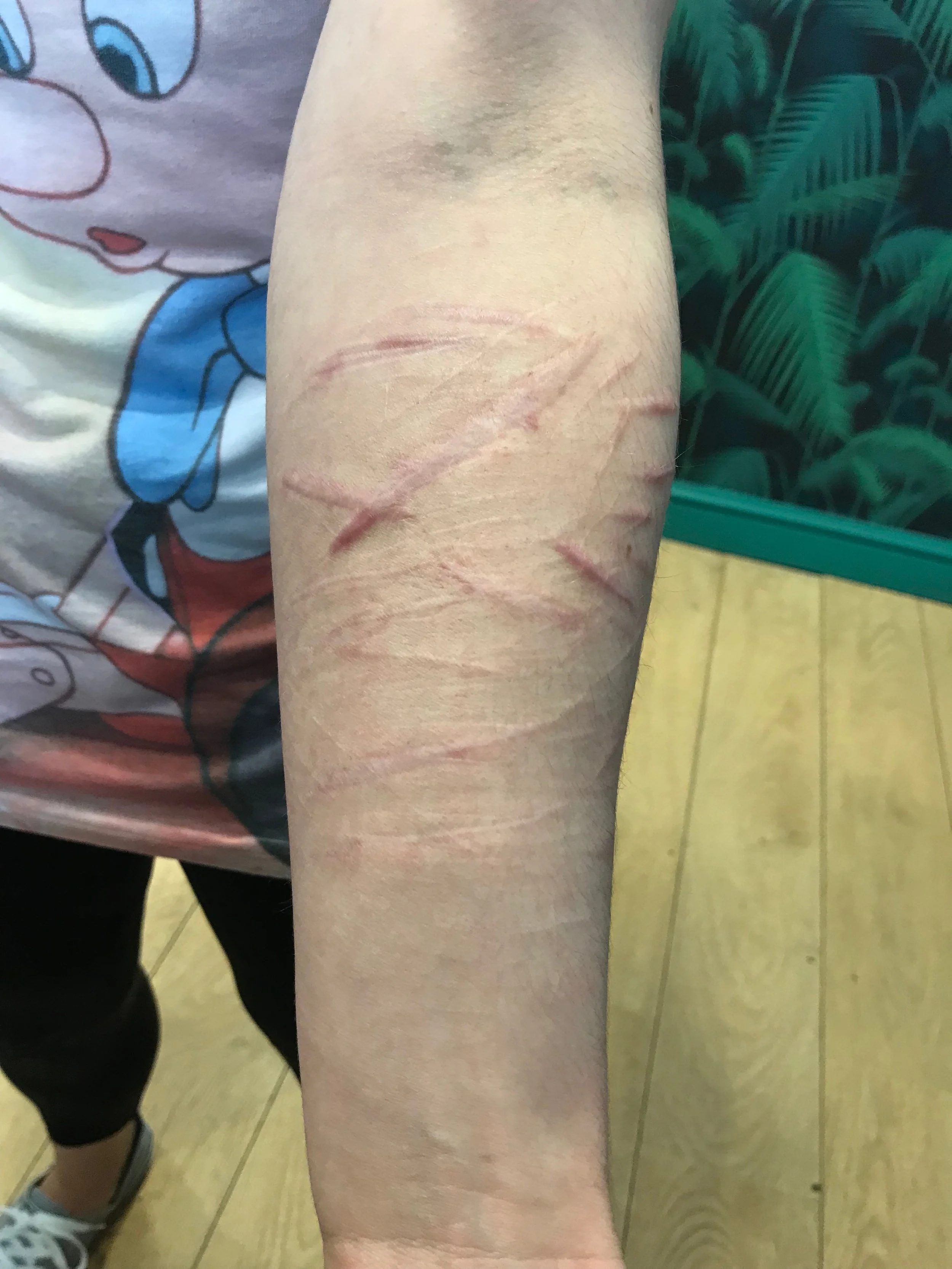
scarring, before

scarring, before